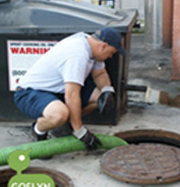
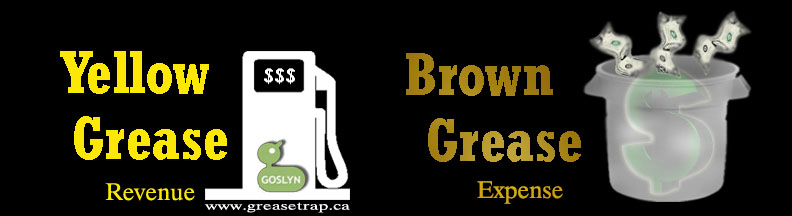
"Grease Trap Waste or Brown Grease is considered hazardous waste in a growing number of jurisdictions. The Price to dispose the grease trap waste has become more expensive with tipping fees. The added disposal cost is passed directly to the restaurants"
Grease Trap Pumping Waste
Brown Grease
Brown Grease (Expense - Disposal Fees)
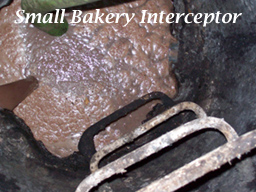
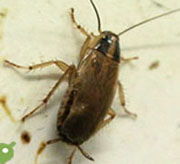
Fat, oils, grease, (FOG) and food solids that rot and increase in content within passive grease traps and grease interceptors from restaurant kitchens and foodservice facilities. Brown grease is commonly referred to as grease trap waste or grease sludge. Brown grease attracts cockroaches, mice, and flies from the sanitary sewer system. Brown grease is a never ending food source for these varmints.
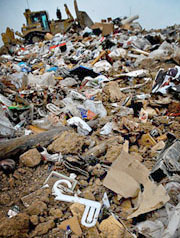
Restaurants must pay to grease trap pumping and hauling companies to dispose of the brown grease from their grease traps. Prices vary depending on the size of your interceptor or the distance your restaurant is from a major city (Fuel prices). The practice of sending brown grease going to landfill is being reduced as time evolves. Grease trap waste facilities perform the arduos task of of dewatering the waste and manufacturing compost from the remains. A portion of the brown grease that is processed goes to landfill.
Yellow Grease
Yellow Grease (Revenue - Paid Commodity)
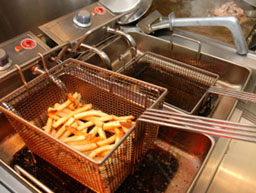
Waste vegetable oil (WVO) from deep-fryers is classified as yellow grease. When restaurants need to change their deep-fryer oil, (at least one time per week) the waste vegetable oil is put into a bin out back of the restaurant. WVO is what thieves are stealing from the restaurants at night.
Restaurants are payed for their WVO by waste vegetable oil recyclers.
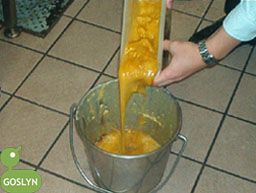
After WVO is filtered and dewatered, WVO is used as fuel for diesel engines. We do not recommend the use of home made bio-fuel. Bio-diesel from WVO will harden in cool temperatures.
WVO or yellow grease is a commodity on the stock market. Fats, oils, and Grease, (FOG) that are recovered from a grease recovery device (GRD - Goslyn) is yellow grease.
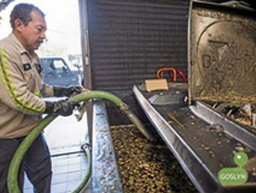
Yellow grease from GRDs contains minimal food solids therefore no decay, rot, or rancid odours. Yellow grease from a GRD is considered "Liquid Gold" to biodiesel manufacturers. Water content & food particles in yellow grease from a GRD are insignificant (less than 1 %).
Yellow Grease is a Revenue
Yellow Grease is Recyclable for Biodiesel
Grease Trap / Interceptor Pumping
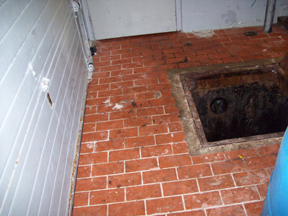
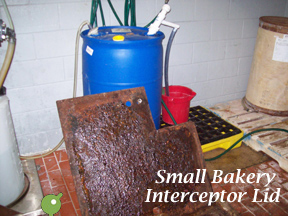
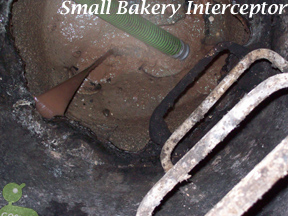
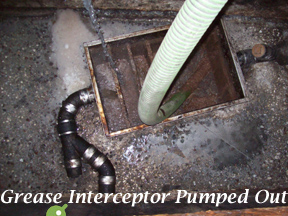
Passive grease traps and grease interceptors should be cleaned or pumped out every 4-6 weeks. Grease Trap pumping rarely occurs on a regular schedule. Many restaurants commit to grease trap pumping when the odour from the interceptor becomes intolerable.
FOG (Fats, oils, and grease) is an organic substance made from animal fats and plants. Imagine, a chicken breast left on the counter for 1 week. The chicken would rot and decay. The rancid smell would be unbearable. The same principle applies with grease traps and grease interceptors within a restaurant facility. The restaurant grease and food solids transform into unrecyclable brown grease. When brown grease from passive grease traps is pumped out, the brown grease has no value. Brown grease impacts landfill and hazardous waste sites in Canada, USA, and Mexico.
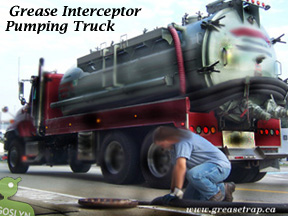
A grease trap pumping truck is a large and annoying inconvenience to any dining facility. When grease trap pumping occurs the restaurant kitchen can not operate. A large hose is brought inside the kitchen to pump-out the brown grease from the grease interceptor. The pumping noise is extremely loud. Grease interceptor pumping will usually occur from the outside of the restaurant. The noise of grease trap pumping will always be an annoyance to the staff and the clientele.
Grease trap pumping is not free. The price of gasoline is rising with no signs of decrease. The cost to send a grease trap pumping truck to a restaurant facility is also increasing. Owning a passive grease trap will require the restaurant to pay a yearly grease trap pumping contract.
The perpetual cost of grease trap / interceptor pumping, rancid odors, unsafe work conditions, as well as the environment impact from brown grease should be factored in to the running of a succesful restaurant operation.
Pump Truck Gas Emissions
Greenhouse gas emissions for diesel are comparable to those of a gasoline engine due its increased fuel economy. The smallest grease trap pumping truck (pickup with tank) get at best 10 MPG empty (No load). The same truck full of yellow grease will average 4 MPG. A gallon of water weighs 8.4 pounds. 8 pounds per gallon for yellow grease (grease is lighter than water). A vacuum service truck will hold between 1000 and 4000 gallons of liquid waste (Between 8000 lbs and 32,000 lbs). There are 10,000+ restaurants in Southern Ontario requiring grease trap pumping monthly or quarterly. We will send the math to a scientist to calculate the gas emissions for grease trap pumping in Ontario alone. Sustainability?
Brown Grease Statistics
A small restaurant has a 50 lb grease trap. The grease trap should be pumped or cleaned out 8-12 times per year. (recommended) A restaurant alone would put 400 lbs of brown grease per year into brown grease processing plants or city landfill sites. If there are 100 restaurants in your city, then there would be 40,000 lbs of brown grease annually.

Make Smart Green Choices
The Earth Depends on it